Showing posts with label PLN. Show all posts

Saturday, January 16, 2010

Effective Schools Correlates: A Teachers' Life for Me!


Urucum (bixa orellana) seeds by árticotropical
Attribution License
What is the core of teaching? What will make all the ideas, activities, books and lessons fall into place in the service to the education of students?

When I was a young teacher, I yearned to have THE answer. It seemed to me that there was an elusive ingredient to being a great teacher. In my mind it was like the golden ring at the merry-go-round. If I just worked, studied, and learned enough, I could grab the golden ring of education. As often happens with young people, I doubted myself. Even though I had wonderful grades, experiences and references, I was seduced into believing that there was ONE answer...a magic key to teaching.

Why did I search for the magic key? I wanted to be the best teacher in the world. I didn't want to doubt. I wanted to KNOW.

Being young, I thought there was always something else, some magic idea out there, that I didn't know, but there wasn't. Yes, there was plenty that I didn't know, but I hadn't figured out that there was no magic bullet that can replace the effective basics that help people learn well. It took some time for me to stop looking for something that I already owned. It took some time for the competitive energy of the student to be replaced by the collaborative efforts of the teacher.

When I was a new to teaching, I had already experienced the positive impression of learning that is based on the Effective Schools research model, encompassed by the SEVEN CORRELATES OF EFFECTIVENESS. I had learned them at the knee of all the effective teachers, community members and family members who taught me.

I also knew what a good teacher looked like as they worked in the classroom. Others might agree that they have had some great teachers, good teachers and not so good teachers, while some who attended the same classes might disagree with their list. What I didn't know, what I yearned to know seemed an elusive ingredient.

Over the years, as I gathered more knowledge and experience, I learned that what I really wanted was to evaluate the effectiveness of my teaching. I discovered that the Effective Schools Research movement could serve as a core set of organizing principles for my educational philosophy.

What are the Seven Correlates of the Effective Schools Research Movement?
  1. Instructional Leadership
  2. Clearly Stated and Focused Mission
  3. Safe and Positive Environment
  4. High Expectations for ALL Students
  5. Frequent Monitoring of Student Progress
  6. Maximize Learning Opportunities
  7. Positive Communication - School, Home, Community      
Are these ideas that people could define or describe? Are these ideas that you want to see in your school? In your teaching? In student's learning? Isn't this a support base for effective student learning? Isn't student learning what it's all about in our world?


Friday, January 1, 2010

McTeach and the Map!


It's all about the learning and having fun makes it better. Karen McMillan, @McTeach, develops the research based presentations for teachers wanting to use technology in their classroom to inspire and improve learning. Her presentations are smart, informative and easy to use right away, plus she invites the participants to join our Professional Learning Network (PLN).

When they join our ad hoc network, they have access to teachers and others interested in improving technology use in education from around the world. The participants can refer to their new network for ideas and guidance. Later, as they become comfortable being part of a worlwide network, they can pay it forward by inviting more people to the network.

For her latest presentation, Karen will share ways to use a Google Map to connect to an education network. In her blog, Notes From McTeach: Where Are You My Wonderful PLN?, she asked her Professional Learning Network (PLN) to help out by adding our geographic locations to the Google Map she developed. Each of us entered our name and a bit about ourselves, including our online presence in her PLN.

 If you are interested in following us, you can reach us on Plurk, Twitter and other similar networks.

Thursday, December 31, 2009

Quantum Aspects of Game Theory

Pass The Pigs by Kaptain Kobold
Attribution-NonCommercial-ShareAlike License

Hagen Lindstädt and Jürgen Müller, authors of Making Game Theory work for Managers, explain the ways in which Game Theory can be used to help business, as well as the ways managers may misuse the theory. This is also a good model for teachers to use when developing a plan to implement standards, teach content, affect student behavior and more.

One problem with using any model, is trying to cherry pick the "best, right" answer to a particular circumstance and not deviating from the plan, even when the scenario changes.

As the authors state so well, the best way to use Game Theory is to develop a "...range of outcomes".

As teachers get closer to the points where the various outcomes diverge, there is usually more data that can be used to revamp the model and hone in on the point of actual reality.
Making game theory work for managers
In times of uncertainty, game theory should come to the forefront as a strategic tool, for it offers perspectives on how players might act under various circumstances, as well as other kinds of valuable information for making decisions.
it’s often misused to provide a single, overly precise answer to complex problems.
The key is to use the discipline to develop a range of outcomes based on decisions by reasonable actors and to present the advantages and disadvantages of each option.

blog it

Wednesday, December 30, 2009

Winsome Wednesday: Google Friend Connect


What blog roll web application do you use? Do you use a WordPress blog, a Blogspot format, or some other format? Does this make a difference when it comes to choosing a blog roll visual web application?

As I continue the Winsome Wednesday feature, we'll look at a utilitarian web application, Google Friend Connect. Used effectively, it can improve productivity and increase the amount of time you can spend reading blogs of people in your Professional Learning Network.

I've used several blog roll web applications in the past. Now I'm using the Google Friend Connect application that comes with my blogger application. I try to support those who follow my blog by following their blog. I also follow other blogs that I use for reference material.

New additions were added to my blog dashboard. The folks at Blogger added a place called READING LIST where you can read the blogs that you joined through Google Friend Connect, as well as Blogger Buzz and Blogs of Note.

I like the simplicity of the Google Friend Connect function for my blog. Anytime I open my blog, I can go to my dashboard and read the posts written by any of the bloggers I follow. If I want to comment or link to their blogs, I can easily do that.

I would like to recommend Google Friend Connect to my Professional Learning Network (PLN). You may want to consider using the Google Friend Connect in the place of the traditional Blog Roll. There are many advantages, besides saving space in your sidebar. People can still refer to bloggers you would list in your Blog Roll, because these same people are now displayed in your Google Friend Connect web application.

Any reader who wants to follow other bloggers in my PLN can just click on their name in my Google Friend Connect box. Do you use the Google Friend Connect box? If so, please add your name to the Google Friend Connect web application on my blog. If not, please consider adding some type of blog roll web application, like Google Friend Connect to your blog.

Thursday, November 5, 2009

Making the Rounds of the PLN!


Be seeing you by Olivander
Attribution-NonCommercial-ShareAlike License
It never hurts to be reminded of the basics of learning, just as was pointed out by members of my Professional Learning Network. 10 Steps to Becoming a Better Writer is a humorous homily for this simple idea about deliberate practice written by Brian Clark.

Thursday, April 23, 2009

I Skype!


the skype payphone project by pt
Attribution-NonCommercial-NoDerivs License
Mr. Robbo, The P.E. Geek, a colleague in my PLN (professional learning network) recently posted his teaching experiences with Skype. I agree with the basic premise of his post, Why Skype Is the Most Valuable Tool I Use. Yes, Skype is a great tool.

It seems strange, yet people often resist the most obvious and easiest internet path to use, free online tools. In my own case, I came to Skype recently, but it has revolutionized the way I communicate with my Professional Learning Network (PLN). What finally helped me begin to use Skype was encouragement from my peers.

Since my teen, as part of her official, school web applications, uses Skype in her Project Based Learning Activities, we discussed how she and her peers use Skype. Later, I wrote an article, Anticipate and Skype Your Reaction about a few of the many possible educational ways teachers could use Skype in their classrooms.

It seems to me that the increased communication capacities when using audio and video, as well as sharing links and screenshots make Skype one of the best free web applications to improve student access to teachers and their learning.

Wednesday, April 8, 2009

Winsome Wednesday: "Doing DaVinci"

Doing da Vinci, a new interactive website with a companion weekly show, contains historical and scientific information about Leonardo da Vinci, as well as games and surveys. There are also video clips and information and interviews about the expert builders who brought da Vinci's machines to life, from his notes and diagrams.

One of the more interesting web applications on this site is Leonardo da Vinci's Personality Quiz. Several colleagues, including CoffeeDdaisy, Lona, sciproLdySlpr, Linda (Mrs C) and brina 1300 in our PLN, professional learning network, tried it out. We found it enlightening, as well as entertaining. This quiz would definitely capture the interest of students and teachers. It could be used as a lesson starter, sometimes called the anticipatory set.

This website contains timelines, samples of da Vinci's machines and a host of other applications that could be used by teachers of any subject.

The draw to da Vinci, as the ultimate Renaissance Man, remain his great and varied interests. Try out the website, quizzes, model-building and dramatizations. The companion television show will air each Monday throughout the month of April.


Image Credits:

Wikimedia.org

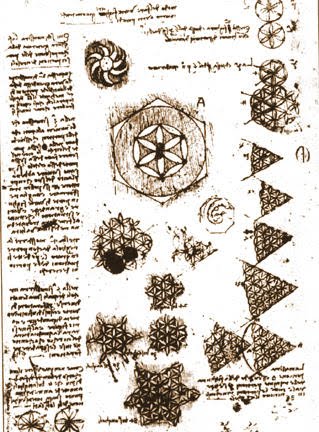
DaVinci Notes of Geometry of Flower

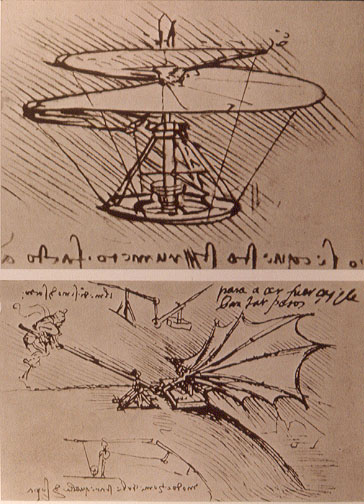
Leonardo da Vinci Helicopter and Lift Wing

Thursday, February 12, 2009

With a Little Help From My Friends


Peace sprout by mj*laflaca
Attribution-NonCommercial-ShareAlike License
After writing an environmental project with various activities, I discovered that I couldn't decide what to name the Kitchen Composting Activity where students will receive 3 redworms, kitchen scraps (no protein or milk) and shredded paper to watch as the worms make soil through composting.

I NEED YOUR HELP! I hope you would select one of the titles that I have listed or suggest your own really cool title.

I hope you agree with me that this survey is a very effective use for Google Docs: Forms in educational processes, and I want to thank you in advance.

Wednesday, January 7, 2009

Opportunity Abounds


Would you go through that door? by The Rocketeer
Attribution-NonCommercial-NoDerivs License


Opportunity abounds all around us. Let's work this new year to see it, while we decide to take it and use it. Opportunity defines our lives in so many ways. People in all walks of life, throughout history, make life changing choices based on Opportunity.


The discussion of this important idea, it history and implementation in education will be a major focus of my 2009 professional development discussions. My most important Opportunity of 2008 was the creation of my Professional Learning Network, and my Personal Learning Network. These wonderful people have been the embodiment of my greatest Opportunity in many years, and I thank them for their knowledge, collaboration, collegiality, friendship and improved Opportunities.

What does Opportunity mean to you?

For song writer, Pete Murray, Opportunity presents a fine canvas to write a song of powerful feelings.

For General George Washington, America's first president, Opportunity was the result of making himself available to accept it. It is widely known that learning about soldiering was an opportunity that his brother provided through fencing lessons and instructions in arms, his service in the French & Indian War and Viriginia militia. As a standing colonel in the Virginia militia, Continental Congress representative George Washington presented himself at the meeting wearing his military uniform. He took his experiences to continue opportunities to serve, and he was nominated by John Adams to be the commander-in-chief of the Continental Army. He took Opportunity and used it for the benefit of our country.


For author, Malcolm Gladwell, Opportunity is the core of his new book on success, Outliers. You can listen to Charlie Rose interviewing Malcolm Gladwell about his latest book and the ideas that support it.

Welcome to the new year. "Opportunity is what you make of it!"

Wednesday, December 10, 2008

Interpreting the PLN


Photo by Sue Waters
Attribution-ShareAlike License


This wikispace, Franklinville: PLN, devoted to understanding the emergence of the Professional Learning Netowrk and its intersection with available web2.0 applications presents a unique perspective that others could easily use or modify for their own discussions. The authors, Tim Clarke and his colleague, Rick Weinberg, have a remarkable repertoire of materials.


Included on the wiki is an excellent video w/a Charles Leadbeater discussion of many of the aspects of various tools and links to those that we can employ to improve our best practice. He also discusses the similarity of thes 21st Century Professional Learning Networks with older more traditional networks.

Tuesday, October 7, 2008

Graphic Organizers Revealed


Photo by Kaptain Kobold
Attribution-NonCommercial-ShareAlike License
When you SEE objects in your mind, do you sort them by their characteristics? by color or shape or size? OR Do you sort them in groups?

When you do this, you are VISUALIZING a graphic organizer that you can create in the World of Matter. The best graphic organizers are those that spring up organically in the course of working. The words and phrases can be organized as you think about them when the need arrives. You can put "stuff" together or to separate "stuff".

While there are many types of graphic organizers, the most common is probably the simplest to use. It is the T-Chart. Not only is it easy to use, it is also extremely effective in a wide range of applications, from brainstorming to assessment.

The T-Chart is a binary checklist, but it also has an advantage of providing data to develop questions that can guide the learner and teacher in more effective learning opportunities. Because of this characteristic, it is a great organizer.

What we know about graphic organizers, in general, ranks them, among instructional strategies, the best, most effective, and easy to implement in real world situations. In the seminal meta-analysis of learning strategies, Classroom Instruction That Works: Research Based Instructional Strategies, Dr. Robert Marzano, et al, dedicate an entire chapter to Graphic Organizers. They discuss the data, the instructional strategy and what implementation looks like in the classroom.

While the T-chart can be helpful in many areas, there is a use that relates to just-in-time learning and teaching which must happen at various moments in any form of constructivist paradigm, including project based learning. For instance, an important part of project is working as a team. If the team doesn't function well, the project will not meet expectations of the team or the supervisor/advisor.

Here is how a T-Chart can help. First ask team members questions...not too many questions, but questions like:
1. What does a team look like?
2. What does a team sound like?
Let each make lists, then join the lists in a brainstorming session USING THE T-CHART...remember...no judging or eliminating anyone's ideas.

Once the ideas are listed on the T-chart in the TWO categories, let each team member have an opportunity to explain or defend their ideas. Some may decide that their idea is similar to another. All team members will listen to each explanation, before they say anything negative or positive.

The team may think of other ideas while they are in discussion mode. When they are finished, the supervisor/advisor asks, "Do you see these ideas being implemented by your team? If not, how could you help to make your team look and sound more like the ideas discussed today?

If the team members aren't sure how they might help make the ideas come true, use another graphic organizer to plan how the team can fit their ideal.

Here is the point where the team interactions may dissolve into individual actions and distractions. Stop the conversation. Let them each take home a copy of the completed T-chart. Encourage them to think how can we (they) as a team can implement these ideas. Encourage them to get feedback from their part of the community (parents, siblings, friends, etc).

The next day, work through the process again. If this doesn't work, then "direct instruction" strategies must be put into play. For instance, advisor/supervisor will state: "Our teams WILL look like this". "Our teams WILL sound like this". "Here are the activities that must occur to make these ideas work". Then the team members will study this T-Chart and implement the ideas in their team interactions to be evaluated daily, using a rubric with goals developed from the T-Chart.

T-Charts are simple. T-Charts are cool. T-Charts are effective. Let's all use T-Charts.


Blogged with the Flock Browser

Wednesday, September 17, 2008

Who I Am: a Reflection of Who I've Been


Photo by lionelbodilis
Attribution-NonCommercial-ShareAlike License
Each semester, Cyndi Danner-Kuhn starts a new .ning network, Kansas Future Teachers for her educational technology students. She is very collaborative and innovative in her work, and I am glad to help by sharing my teaching and learning experiences with these pre-service teachers at Fort Hayes State University. I have included a copy of my introduction essay for this semester's students.

If you are reading this, you are, most likely, part of my PLN (professional learning network). I would like to invite you to join us and share your expertise.


Remember the saying, "What Goes Around Comes Around?" As the years go by, ...that saying [will] reveal itself in action more and more. This an opportunity to put into practice what we call scaffolding, or the spiral of knowledge that Vygotsky suggested in his theoretical studies of learning. As a life-long learner, I have used that spiraling ...[visualization of learning] to make connections in my education, teaching career and life.

Since I began teaching in 1975, I have learned, taught and experienced a multitude of theories, trends and issues as they appear, disappear and reappear.

One thing that I can say with certainty is that my professional teaching life has been healthier and happier when I "go with the flow", when I
* see an opportunity for professional growth in NEW THEORIES that are really old wine wrapped in a new flask
* understand that bad situations make sad communities and you just have to "walk away", kick the dust off your sandals and never look back.

I am healthy and happily working online, building my Professional Learning Network (PLN) and providing professional development resources "...in service to the community".

Having taught many grade and subject levels from Kindergarten to college level students, I enjoy teaching. My areas of expertise began with Microbiology, then elementary, then high school and later, special education K-12. My resume' is quite extensive, yet I have had the privilege to learn, grow, and work with many teachers, parents and other community members who were even more insightful, knowledgeable and collaborative. My career has taken me from the forested region across Lake Ponchetrain in Louisiana to the desert plains of the Llano Estacado in Southeastern New Mexico to continue here in Kansas.

Through living the life of a teacher's child, I always sought the camraderie and professional advice of those who were the most experienced at the schools where I taught. I still do that, yet it is a bit more difficult now because I am frequently the "grand dame" of the school.

Of course, in teaching, it's all about the kids, but you MUST take care of yourself. You must be healthy and happy. If you aren't, if you keep your "nose to the grindstone, you will end up with no nose!" You will become worn out...you will be unable to accept change....you will not GROW as a teacher.

The take-away message here is to remember that you are part of a TEAM of people, including students, parents, teachers, and the larger community of learners. It is my belief that you will be a better teacher when you work in a collaborative, not competitive environment where people's self esteem comes from providing for students, not gathering accolades for all the "stuff" you belong to or control. When you and your community are really teaching and learning, the accolades will follow.

If you have decided to become a teacher, you know you won't make much money, you know you will work long hours and you know that you must live a tightly controlled life, BUT THIS IS ALL WORTH IT, iff you have the OPPORTUNITY to teach kids who learn and develop in your care. That's right! Your care, your guidance, your teaching is the key! That is what it is all about! The pure joy of watching children of various ages and stages learn and grow as you teach.

Tuesday, September 16, 2008

Who I Am in the Here and Now


Who I Am w/caption
Originally uploaded by n2teaching
This is the mosaic I developed from various pictures from my area and life to share in @bookjewel's excellent idea to help promote and share our PLN (professional learning network) as she detailed in her latest post, ‘PLN Reflections’: sharing ideas and building relationships.

Each person from our PLN who volunteered to share in this presentation, added a slide to a Google presentation file. I selected one of Mahatma Ghandi's inspriational quotes.

Take charge of what you can do to change your world. There is so much potential for professional development and in teaching students in this wonderful project idea. Thanks to @bookjewel.

Tuesday, June 24, 2008

A Wee Post About Journey North

Description unavailableImage by ccmerino via FlickrMany of my colleagues at Diigo share marvelous bookmarks that relate to various hands-on and outdoor teaching categories, and Tami Brass shared a great resource,Group Recipes. She and I discussed other websites to help teachers in these hands-on subjects enter the Web2.0 world.

She mentioned other teachers interested in golf and another who is a voluteer in a nature center and intereseted in raptors who could be introduced to Web2.0. While I couldn't help out with the golfers, I realized one of my favorite science networks, Journey North would give the raptor afficionado as starting place to see the value of online learning networks.

Here is my introduction from Diigo:

Can't help with the golfers, but one the oldest and most respected wildlife migration and habitat study groups is Journey North.

They have an entire section of work with a variety of animals, including RAPTORS, whales, Monarch butterflies, and many others. Journey North organizers present cool science projects like the tulip growing, Mystery Classroom, etc for classes to join. A teacher can pick as few or as many of these project as they want to participate in.

While the Journey North project started as a way to study the Monarch butterfly migration in North America, it has gone global. Kids and teachers in classes all over the world participate in many of the activities like Mystery Classroom and Tulip Growing(phenology) experiments.
Zemanta Pixie