While I've taught more than substituted, I can tell you that substituting is the hardest type of teaching to accomplish. If you plan to truly work effectively as a substitute, here are some ideas that you might want to consider.
The teacher who works diligently to have good lesson plans, deserves a substitute that will effectively use them with the class.
If the teacher leaves good notes, the substitute should leave good notes about what happened through the day.
The substitute stands in for the teacher, and their best philosophy is to help the teacher as well as possible.
Not all substitutes or teachers are equal, so these high expectations may not be implemented by them. Those teachers who have high expectations for the substitute working in their classroom, should request and receive a substitute who agrees with their high standards.
This has always been an important topic, yet it is always helpful to discuss our beliefs about the need and use of effective substitutes.
Showing posts with label teacher. Show all posts
Showing posts with label teacher. Show all posts
Monday, July 19, 2010


Saturday, January 16, 2010
Effective Schools Correlates: A Teachers' Life for Me!
What is the core of teaching? What will make all the ideas, activities, books and lessons fall into place in the service to the education of students?
When I was a young teacher, I yearned to have THE answer. It seemed to me that there was an elusive ingredient to being a great teacher. In my mind it was like the golden ring at the merry-go-round. If I just worked, studied, and learned enough, I could grab the golden ring of education. As often happens with young people, I doubted myself. Even though I had wonderful grades, experiences and references, I was seduced into believing that there was ONE answer...a magic key to teaching.
Why did I search for the magic key? I wanted to be the best teacher in the world. I didn't want to doubt. I wanted to KNOW.
Being young, I thought there was always something else, some magic idea out there, that I didn't know, but there wasn't. Yes, there was plenty that I didn't know, but I hadn't figured out that there was no magic bullet that can replace the effective basics that help people learn well. It took some time for me to stop looking for something that I already owned. It took some time for the competitive energy of the student to be replaced by the collaborative efforts of the teacher.
When I was a new to teaching, I had already experienced the positive impression of learning that is based on the Effective Schools research model, encompassed by the SEVEN CORRELATES OF EFFECTIVENESS. I had learned them at the knee of all the effective teachers, community members and family members who taught me.
I also knew what a good teacher looked like as they worked in the classroom. Others might agree that they have had some great teachers, good teachers and not so good teachers, while some who attended the same classes might disagree with their list. What I didn't know, what I yearned to know seemed an elusive ingredient.
Over the years, as I gathered more knowledge and experience, I learned that what I really wanted was to evaluate the effectiveness of my teaching. I discovered that the Effective Schools Research movement could serve as a core set of organizing principles for my educational philosophy.
What are the Seven Correlates of the Effective Schools Research Movement?

When I was a young teacher, I yearned to have THE answer. It seemed to me that there was an elusive ingredient to being a great teacher. In my mind it was like the golden ring at the merry-go-round. If I just worked, studied, and learned enough, I could grab the golden ring of education. As often happens with young people, I doubted myself. Even though I had wonderful grades, experiences and references, I was seduced into believing that there was ONE answer...a magic key to teaching.
Why did I search for the magic key? I wanted to be the best teacher in the world. I didn't want to doubt. I wanted to KNOW.
Being young, I thought there was always something else, some magic idea out there, that I didn't know, but there wasn't. Yes, there was plenty that I didn't know, but I hadn't figured out that there was no magic bullet that can replace the effective basics that help people learn well. It took some time for me to stop looking for something that I already owned. It took some time for the competitive energy of the student to be replaced by the collaborative efforts of the teacher.
When I was a new to teaching, I had already experienced the positive impression of learning that is based on the Effective Schools research model, encompassed by the SEVEN CORRELATES OF EFFECTIVENESS. I had learned them at the knee of all the effective teachers, community members and family members who taught me.
I also knew what a good teacher looked like as they worked in the classroom. Others might agree that they have had some great teachers, good teachers and not so good teachers, while some who attended the same classes might disagree with their list. What I didn't know, what I yearned to know seemed an elusive ingredient.
Over the years, as I gathered more knowledge and experience, I learned that what I really wanted was to evaluate the effectiveness of my teaching. I discovered that the Effective Schools Research movement could serve as a core set of organizing principles for my educational philosophy.
What are the Seven Correlates of the Effective Schools Research Movement?
- Instructional Leadership
- Clearly Stated and Focused Mission
- Safe and Positive Environment
- High Expectations for ALL Students
- Frequent Monitoring of Student Progress
- Maximize Learning Opportunities
- Positive Communication - School, Home, Community
Thursday, January 7, 2010
Did You Nominate This Teacher?
On January 6, 2010, President Obama met the small group of teachers who were awarded the Presidential Award for Excellence in Mathematics and Science Teaching. These teachers were K-6 teachers recognized first at the state level and later at the national level based on an extensive application process evaluated by prominent mathematicians, scientists, mathematics/science educators, and past awardees. They were selected as those teachers who provide a high quality math and science experience for their students.
This teaching award began in 1983 when the US Congress created the Presidential Award for Excellence in Math and Science Teaching. Each year, the president is authorized to provide as many as 108 teaching awards to eligible candidates for the highest national recognition for science and math teachers.
These K-6 teachers, pictured with President Barack Obama received the latest PAEMST Awards. Following that is a list of their names and the locations where they teach.
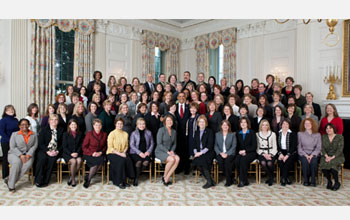
Credit: Official White House Photo by Chuck Kennedy
2008 PAEMST Awardee Cohort
Vickie Ahlstrom (Pleasant Grove, Utah)
Charles Bertsch (Polson, Mont.)
Mary Black (Dubuque, Iowa)
Georgia Boatman (Kennewick, Wash.)
Michele Brees (Burien, Wash.)
Stacie Broden (Waterbury, Conn.)
Sharon Brown (Severna Park, Md.)
James Brown (Stillwater, N.Y.)
Jane Callery (Ashford, Conn.)
Susan Carter (Saint Charles, Mo.)
Cary Cermak Rudolf (Roseburg, Ore.)
Melissa Collins (Memphis, Tenn.)
Kathleen Conroy (Charlotte, N.C.)
Zan Coonce (Reno, Nev.)
JoAnne Deshon (Newark, Del.)
Jeri Doane (Edmond, Okla.)
Kari Dresow (Sedalia, Ky.)
Keri Dowdy (Kimball, Minn.)
Christa Duthie Fox (Essex Junction, Vt.)
Candy Ellard (Austin, Texas)
Amy Ellis (Starkville, Miss.)
Gay Erb (Boise, Idaho)
Kathryn Eyolfson (Aurora, Colo.)
Diana Fesmire (Alamogordo, N.M.)
Erin Flynn (East Walpole, Mass.)
Karen Fredricks (Newark, Del.)
Christi Fricks (Pendleton, S.C.)
Sharon Hall (Maineville, Ohio)
Lana Hansen (Littleton, Colo.)
Angela Hansen Cook (Fargo, N.D.)
Michelle Harris (Anita, Iowa)
Sherry Helus (Wamego, Kan.)
Kathleen Hill (Kalispell, Mont.)
Rebecca Holden (Harrison, Tenn.)
Laura Hulsebus (Chugiak, Alaska)
David Ireland (Hermosa, S.D.)
Dana Islas (Tucson, Ariz.)
Haley James (Madison, Ala.)
Kristen Jarboe (Frankfort, Ky.)
Linda Kehr (Klamath Falls, Ore.)
Sandra Kelish (Stafford, Va.)
Barbara Kelley (Grapevine, Texas)
Rebecca Kitts (Pierre, S.D.)
Amy Knerr (Carmel, Ind.)
Susan Kunze (Bishop, Calif.)
Anne Magaha (Hatboro, Pa.)
Mary Meggett (Charleston, S.C.)
Teresa Minogue (Webster, N.H.)
Patricia Morgan (Norman, Okla.)
Kimberly Mueller (Cinnaminson, N.J.)
Susan Naylor (Parkersburg, W.Va.)
Karen Nesbit (Franklin, Wis.)
Cathleen Newton (West Hartford, Vt.)
Jennifer Norford (Charlotte Amalie, V.I.)
Monica Norwood (Little Rock, Ark.)
Suzanne O'Brien (Washington Township, Mich.)
Halley Page (Athens, Ga.)
Sally Pellegrin (Avon Lake, Ohio)
Carrie Persing (Chester, Va.)
Jon Phillips (Grand Blanc, Mich.)
Suzanne Pilon (Hilton, N.Y.)
Sara Rebecca Pittard (Ormond Beach, Fla.)
Susan Poage (Berkeley Heights, N.J.)
Kendra Pullen (Shreveport, La.)
Amy Radden (Casper, Wyo.)
Charles Reynes (Castro Valley, Calif.)
Debra Reynolds (Denham Springs, La.)
Kamilla Riek (Saint Louis, Mo.)
Jennifer Rising (Lake Forest, Ill.)
Natalie Robinson (Pleasant Grove, Utah)
Patia Rountree (Statesboro, Ga.)
Regina Scott (Greenwood, Ind.)
Deborah Seaver (Milford, Mass.)
Wendy Shelden (Cocoa, Fla.)
Cheryl Silcox (Anchorage, Alaska)
Jeanette Simmons (Pontotoc, Miss.)
Kimberly Spencer (Yarmouth, Maine)
Barbara Stoflet (Minnetonka, Minn.)
Melinda Storey (Birmingham, Ala.)
DeAnn Swofford (Olathe, Kan.)
Liane Tanigawa (Waipahu, Hawaii)
Pamela Thompson (Industry, Maine)
Loreen Whalen McMains (Herman, Neb.)
Nola Wilkinson (Decatur, Ill.)
Carol Wooten (Cary, N.C.)
Seanyelle Yagi (Kailua, Hawaii)
Thursday, December 31, 2009
Quantum Aspects of Game Theory

Pass The Pigs by Kaptain Kobold
Attribution-NonCommercial-ShareAlike License
Hagen Lindstädt and Jürgen Müller, authors of Making Game Theory work for Managers, explain the ways in which Game Theory can be used to help business, as well as the ways managers may misuse the theory. This is also a good model for teachers to use when developing a plan to implement standards, teach content, affect student behavior and more.
One problem with using any model, is trying to cherry pick the "best, right" answer to a particular circumstance and not deviating from the plan, even when the scenario changes.
As the authors state so well, the best way to use Game Theory is to develop a "...range of outcomes".
As teachers get closer to the points where the various outcomes diverge, there is usually more data that can be used to revamp the model and hone in on the point of actual reality.
One problem with using any model, is trying to cherry pick the "best, right" answer to a particular circumstance and not deviating from the plan, even when the scenario changes.
As the authors state so well, the best way to use Game Theory is to develop a "...range of outcomes".
As teachers get closer to the points where the various outcomes diverge, there is usually more data that can be used to revamp the model and hone in on the point of actual reality.
Making game theory work for managers In times of uncertainty, game theory should come to the forefront as a strategic tool, for it offers perspectives on how players might act under various circumstances, as well as other kinds of valuable information for making decisions. it’s often misused to provide a single, overly precise answer to complex problems. The key is to use the discipline to develop a range of outcomes based on decisions by reasonable actors and to present the advantages and disadvantages of each option.
|


Sunday, December 27, 2009
Getting Started in Web2.0
Getting Started in Web 2.0 is a great presentation to help develop activities to use when building effective school communities with Web2.0 tools.
You can encourage parent interactions with the school and teachers that will ultimately improve the learning of children. This wonderful school presentation was created using Google Docs. You can use it as a guide for several activities in the learning practices of a school community.
1. Professional Development for teachers and staff.
2. Parent meeting presentation
3. Class lesson
4. School Board meeting
Use this presentation, by Dan Noble, as a springboard for your own parent interaction presentation. That's what the author is hoping.
Tuesday, December 1, 2009
Glogster Education: DIY for teachers
Try out the Glogster Education website. It's easy to add your students, and they don't have to have an email address. The teacher has control over the project distribution and content. Save money, resources and the environment by eliminating the need for traditional posters. These can be saved in .jpg format and displayed on monitors or digital photo frames.
You may use my sample, but I would appreciate it if you would link to this article or cite my work.
If you are using Glogster, what do you think of the product? What was your experience?

Wednesday, April 8, 2009
Winsome Wednesday: "Doing DaVinci"
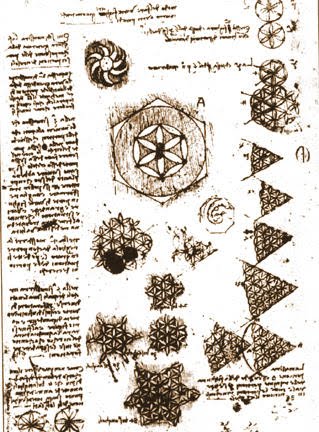
One of the more interesting web applications on this site is Leonardo da Vinci's Personality Quiz. Several colleagues, including CoffeeDdaisy, Lona, sciproLdySlpr, Linda (Mrs C) and brina 1300 in our PLN, professional learning network, tried it out. We found it enlightening, as well as entertaining. This quiz would definitely capture the interest of students and teachers. It could be used as a lesson starter, sometimes called the anticipatory set.
This website contains timelines, samples of da Vinci's machines and a host of other applications that could be used by teachers of any subject.
The draw to da Vinci, as the ultimate Renaissance Man, remain his great and varied interests. Try out the website, quizzes, model-building and dramatizations. The companion television show will air each Monday throughout the month of April.
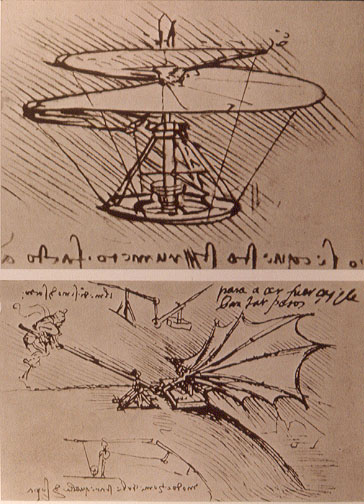
Image Credits:
Wikimedia.org
DaVinci Notes of Geometry of Flower
Leonardo da Vinci Helicopter and Lift Wing
Tuesday, March 17, 2009
Opportunity to Adapt: 20th Century Preconceptions

If we want to think of ourselves as Twenty-first Century educators, we must remove some of the old paradigms that affect this view of learning. One of the most prevalent preconceptions is the definition of TEACHER.
What is a 21st Century Teacher?
Who is a 21st Century Teacher?
Where does a 21st Century Teacher function?
Do all 21st Century Teachers have an official class?
Do all 21st Century Teachers have an official school?
When does a 21st Century Teacher teach?
Why does a 21st Century Teacher teach?
While there may be some new words for teacher, educator comes to mind, I am wondering how the lines between informal education and formal education through the advances of web applications and other technologies are blurring the definitions of teachers or educators?
It seems to me that this blurring of the learning place is an opportunity for all of us to change our 20th Century preconceptions of teacher/educator into the 21st Century paradigms. Are you doing that? Do you respect all educators no matter their place of being? OR Are you stuck in the 20th Century?
Monday, November 10, 2008
WORDLE: A Practical Application

WORDLE has a function that allows users to submit any del.icio.us user name to make a non-linguistic representation of bookmark tags. You can analyze the use of various tags within your bookmarks and look for areas of great emphasis, synonymous tags or areas of little emphasis. Each of these areas of analysis can drive future teaching and writing related to your professional development plan and the school's curriculum map.
I created my delicious WORDLE that could be used formative assessment, summative assessment or self-assessment by analyzing this snapshot from November 10, 2007 of n2teaching delicious bookmarks
Here is another version of the same set of bookmarks on the same day that contains more words. Controlling the number of total words is an aspect of WORDLE that you can change within the layout function. Hopefully, these ideas will lead you to think of more ways to use WORDLE as an interactive tool, not just a toy.

Saturday, August 16, 2008
BubbleSnaps: Quick and Easy
BubbleSnap was recommended by a colleague in Plurkadia, so I tried it out. Whether you have unlimited time to think of a clever saying to go in the bubble, or you need something NOW, BubbleSnap will work for you.
My colleague used shared how she used BubbleSnap to develop an introductory letter for her students. I think another use would be to develop a captioned BubbleSnap picture to be used as an anticipatory set, questions on a test or any number of other educational ideas.
I downloaded, captioned, emailed, saved and copied my sample BubbleSnap to blog in under 5 minutes. You can also use your Flickr pictures.
BubbleSnap is easy to use, and the steps are very straightforward. You can email, print or blog your BubbleSnap. I recommend it for anyone, but especially for teachers and students.
Monday, June 30, 2008
Be Prepared!


Technology in all its forms have fascinated me since I was a child. I am thrilled that the opensource and DIY technologies are not just surviving, they are thriving. I love to see what wonderful possibilities and opportunities are available to teachers, parents and students in this vast World Of Electrons.
Conversations continue on the topic of DIY vs corporate, packaged simulacrums of what is available online....imitation copies that corporations convince administrators and technology directors will be "just as good" as what a teacher and class can create themselves. I strongly disagree.
A twitter colleague, @garageflowers, just cited a blog post on this topic, I Guess I'm Still a Punk.
After reading this blog post, I had to share my comments to the author, @glassbeed, with my readers. Mostly, they relate to a basic tenet of teaching, about being prepared to stand up for what you believe. If you want to support DIY technology, I believe you should be prepared to describe, design and defend it.


Yes, I agree. This was a great post. I love DIY technology, and I have worked diligently to document and explain how teachers can use it effectively in their classes or with students.
I was just thinking about your post when I went to my blog to capture my url and saw that WeatherPixie is down. This is a prime example of the downside of DIY technology. Teachers must prepare for the positive, as well as negative aspects of DIY technology in their classes.
WeatherPixie has been a pivotal widget for teachers and students. The developer of WeatherPixie is not the problem, but the company who owns the server that supports her website had a fire. This was a problem that she couldn't help, but it highlights a problem that tech directors and administrators can cite to keep teachers from using these free online tools. Teachers must be prepared.
Another concern associated with opensource products and online tools is that they are ephemeral. They may be here today and gone tomorrow, for any number of legitimate reasons. That makes it difficult for teachers to really go to the wall arguing for the use of this technology. They must be prepared.
I am saying use this developing technology, but a teacher must be VERY agile and have backup plans in case tools aren't available. Also, teachers should decide how they will console students if their projects are lost. They must be prepared.
It is great to be a DIY tech person, but you have to be prepared;D

Thursday, June 12, 2008
Be a Book Wizard!
Embed this new widget, Teacher Book Wizard, in your website or blog and anyone can use it to find children's books by author, keyword or title.
Scholastic has used Google gadgets to create an excellent teacher resource, a children's literature search engine. When you find the book you listed, you will receive information about the reading and interest levels, as well as purchasing information.
You can search for your favorite book or new titles to help you develop an instructional unit. I selected a variety of keywords to use in the Teacher Book Wizard Widget and a representative list of available books on the topic were found and listed by this search engine.
I embedded this widget in mymindtoyourmind widget wiki. It will make a nice addition to the variety of other widgets that I previously recommended for use by teachers.
Many of the titles are published by Scholastic, yet the search engine results do include book titles from other publishers in this search engine. This search engine is not perfect by any means, so I would encourage you to also use other search engines like Xoost for hard-to-find titles.
When readers at your blog, wiki, or website use the Teacher Book Wizard Widget, they will be taken away from your site to the Scholastic site. I would like to see this widget open in another tab or window. While this is an inconvenience, it is not a major hindrance.
Scholastic has used Google gadgets to create an excellent teacher resource, a children's literature search engine. When you find the book you listed, you will receive information about the reading and interest levels, as well as purchasing information.
You can search for your favorite book or new titles to help you develop an instructional unit. I selected a variety of keywords to use in the Teacher Book Wizard Widget and a representative list of available books on the topic were found and listed by this search engine.
I embedded this widget in mymindtoyourmind widget wiki. It will make a nice addition to the variety of other widgets that I previously recommended for use by teachers.
Many of the titles are published by Scholastic, yet the search engine results do include book titles from other publishers in this search engine. This search engine is not perfect by any means, so I would encourage you to also use other search engines like Xoost for hard-to-find titles.
When readers at your blog, wiki, or website use the Teacher Book Wizard Widget, they will be taken away from your site to the Scholastic site. I would like to see this widget open in another tab or window. While this is an inconvenience, it is not a major hindrance.
 clipped from www.scholastic.com clipped from www.scholastic.comWhat is the Teacher Book Wizard Widget and how do I use it? FREE ultimate children's book search engine The widget will help teachers find:
embed the Teacher Book Wizard Widget onto your Web site or blog.
|


Saturday, June 7, 2008
Technology in Stone


CAD, computer assisted drafting, has been around so long it has even seen a transition to the public sphere in freeware products like SketchUp.
Thankfully, the technology teachers who work in these interesting vocational fields still make their work look exciting. It must be the "Tom Sawyer" effect.
Simon B. , an educational colleague, shares excellent videos about his work with students, TAFE and various colleagues in stonemasonry. They are all very interesting and instructive. 
The latest addition to the video collection for Stonemasonry wiki opens with an interview of Michael Landers, head stonemasonry teacher at Miller College Institute, standing in front of a marvelous work in stone.
If you like beautiful things or hands-on work, you should check out this wiki, Stonemasonry, as well as SkillsOne.

Tuesday, May 20, 2008
YouTube, Copyright and Lucacept
Are you developing lessons on Acceptable Use Practices, copyright issues, or Creative Commons? Then you may be interested in my discussion of this topic, as well as a wonderful blog posting by Jenny Luca at lucacept with her questions about the trends in copyright, education, students, the internet and teachers, YouTube and Copyright: the dilemma for educators.
Jenny ends her posting with these thoughtful questions.
I’m wondering about the future of copyright and what may happen now that user generated content is really taking off. Will we see a backlash against copyright regulations? Will we see users post their content and stipulate that it can be used and reformatted so that educators can employ it in classrooms to convey important messages? Will more people use creative commons licences to allow their work to be used easily in educational settings? Will the copyright council be able to stem the flow of infringements to the law as more and more educators realise the potential benefits of YouTube to provide useful content for classroom instruction?
This is my response, and I am responsible for my opinions and statements on this topic. Thanks go to those who prompted me to think of these topics, but they are in no way responsible for any of my opinions or statements here.
Your insightful lessons using YouTube must encourage students to upload their work [there], and this is a wonderful extension of this popular media venue into their educational life.
Thanks for the tip on downloading before the lesson. That would help prevent ruined lessons from technical malfunctions.
Hopefully, Creative Commons Copyright will become more prevalent. I use the Share-alike Copyright, in my work, and I encourage others to consider it. Even though some dispute it, teachers have permission to use work under American copyright for educational purposes.
I follow Lawrence Lessig's lessons and stories(Free Culture) on what happened when business became more important that expression.
I am all for making money, yet I agree with those who believe that family or corporate empires don't need to be maintained from one person's or group's work. For example, our new copyright laws directly favored Sonny Bono's widow (who replaced him in the US Congress, after his untimely death while on a SKI TRIP).
I am not sure why the work of Sonny Bono is more important than the work of John Phillip Sousa, but hey you never know.
Lawrence Lessig,[Stanford law professor] gives an excellent Ted speech about John Phillip Sousa's active disagreement with long copyrights. Sousa believed that we would have a more creative, richer world if people were allowed to have access to copyrighted work after a much shorter time than we have now. I agree.
Thanks for discussing this important topic.
Wednesday, February 20, 2008
Voki, OK!
Voki, Oki, Oki, Oy! When the producers of Voki discovered this name, they were on to something engaging. The web application is cool, the name is cool and the ways you can use it are cool. Voki is very cool.
My first experience with Voki was on a profile page of one of my Classroom 2.0 colleagues, Jonelle. I was smitten. The realistic avatars, backgrounds and presentation box were so appealing that I had to find out about Voki.
Students are also enticed by Voki, even mature, sophisticates (young adults) have engaged Voki. They use it to tell about themselves, to share information about their school and to practice their online, interactive skills in a protected environment.
Since Voki is a widget, a web application, it stands alone. While you do sign up for Voki, you don't have to interact within a community to benefit from this application. I have seen Voki avatars in a variety of online places, including profiles, blogs, wikis and webspaces. Any of these places can provide students a protected environment where they can experiment and develop educational online experiences.
One aspect of Voki that can be interactive is the comment section of the Voki box, so students can respond to a Voki presentation, just as they might comment on a blog. While commenting or making their first Voki, students don't have to use their own voices. Voki has a text to talk mechanism with a choice of several accents and voices of both genders. I use the Kate voice who has a slight British accent, and I consider it most effective.
Earlier, I wrote a blogpost explaining how to accomplish a action research based evaluation of Voki, as used by students called, "Welcome to My Web!", Said the Spider to the Fly, included Voki and Weather Widget in a blogpost. The purpose of this first post included evaluating web based, online applications, so I reviewed Voki as soon as I started using it.
Recently, I decided to make another review of Voki, because I believe this widget has met critical mass among those teachers using online, web applications with their students. In one day, I found Voki on the majority of the new websites, blogs and wikis that I visited among a group of teachers planning an online educational conference. That is above and beyond all of my colleagues on various educational networks who are using Voki extensively.
Documenting this rise in the use of Voki, I made several searches, some were general search engines and the social bookmarking network, favored by teachers, del.icio.us. If there are other networks or search engines that I could use in the future, please let me know;D Here are some of the results:
*del.icio.us There were a total of 139 SEPARATE bookmarks for VOKI. Within those bookmarks, more than 5,000 users had also selected this combination of 139 bookmarks.
*google.com A total of 33,000 website references contained this search string: Voki, education, school. Amazing!
*yahoo.com More than 40,000 urls contained the same three tags: Voki, education, school. There are thousands more because I noticed that all tags of Voki in Classroom 2.0 were clustered in one search result, so that is probably the same situation in all the educational network searches.
*adonomics.com A Facebook analysis and developer services has many compare/contrast analyses. This one is comparing Voki to Meez.
References to Voki can be found in Digg and Ask.com, so it seems the point is proven that Voki has reached critical mass for educational use around the world. Have fun and learn with Voki;D
BTW: I find it very exciting to see the expression of the promise of a particular widget that I know has great educational potential. There are specific educational activities and projects that Voki can enable or enhance, and that is a blogpost all in itself.
Thursday, January 24, 2008
Lunch Box Police
This is a ClipMark that was made from an article highlighted by one of our UK Twitter EDTech colleagues. I thought it was worth sharing here on my teaching blog.
Our question was, "Where will the social controls end?"
Our question was, "Where will the social controls end?"
 clipped from news.bbc.co.uk clipped from news.bbc.co.uk
Head teachers' leaders fear they could be forced to snoop in children's lunch boxes under plans to tackle obesity.
Head of the ASCL teaching union John Dunford said policing the contents of pupils' lunch boxes was a step too far.
|

Saturday, December 1, 2007
Tweet, Tweet!
Unless you are a student of early 20th century music, Mitch Miller, or children's music, you may not recognize this song, Let's All Sing Like the Birdies Sing! Tweet, Tweet, Tweet. Tweet, Tweet!, but it is appropriate for what all twitterers do! We TWEET! & TWEET! often. I find Twitter to be an excellent mini-blogging and social networking tool that does allow opportunities for use in the classroom.
At Classroom 2.0, Elizabeth Davis started a discussion on Twitter, Are You Using Twitter?.
Many of us have contributed some interesting thoughts about why, how, where, when we tweet and to whom we tweet. This has been one of the most informative, interesting discussions we have had while I have been a member of Classroom 2.0 educational social network. Please access the discussion. You will enjoy it.
As the discussion progressed, the CR2.0 network evaluated the finer points of our use of Twitter. An important issue discussed was whether to follow people who don't follow you. The problem is that you become interested in their tweets, but you can't send them messages unless they also follow you. My ambiguous thoughts are reflected here:
Following someone on TWITTER is not all it's cracked up to be....sometimes! I don't follow anyone, for long, who won't follow me within a time span, UNLESS there are some overcompensating issues....such as access to information, humor, or other points of interest in their tweets.
For instance, it is highly unlikely (although not impossible:) that Leo Laporte, of TechTV, Twit.tv, and lately Lab with Leo will probably ever follow me, BUT he provides information that is so valuable TO ME that I continue to follow him. He also does not overwhelm my twitter network.
This interaction problem is not a drawback on Jaiku! I really like the comment section on each Jaiku posting. I can comment on anyone's Jaiku posting. There will be people who won't like this, and that is why they may appreciate the selectiveness of Twitter more than Jaiku's forum like qualities.
If people do not want to have a person on their Jaiku contact list, they can remove them. In my experience, what really happens is that most people check your Jaiku postings, and they often become a follower or at least they accept comments and contact! :)
Right now, another member of the #twit(tv) group and I are having a conversation about the low number of women geeks. He thinks there should be more, and I agree! I commented on his posting to Jaiku to #twit(tv)....because I am in the twit(tv) group. He is not in my individual contact list and I am not an individual contact on his list. As a result of this conversation, we may follow each other, or not....BUT we can interact.
What do you think about social networks, such as miniblogging and instant messaging? Do you use Twitter? If not, why not?


Friday, October 26, 2007
I Still Don't Get It! What's Your Sign?
Even after all these years in Teaching, I am still shocked and amazed that teachers, who should be the BEST interpreters of all, still can't understand the reality the choose to visit, share or advise.
The lack of critical thinking skills among those who profess to be on the forefront of their teaching field boggles the mind. I will admit, I do recover faster than I used to when I was younger, after a surreal encounter with these characters. Most times, I don't try anymore to explain to these people they are walking down a blind alley. Let them be blissfully ignorant. LOL! Those who cannot see.....
If I wasn't a teacher, with a strong background in successful collaboration, I don't think I could bear to know that there are teachers in our schools, especially our universities, who can't think their way out of a paper bag. LOL, Yes, I know I wouldn't be able to stomach it. LOL No wonder the public talks about teachers like they do.
It is my contention that a truly valuable lesson can be learned or refreshed here, by inexperienced, as well as experienced teachers. Humility and courtesy can improve thinking skills through cooperative learning, interpretive skills and true collaboration.
Here is the story:
A new member, I will name Done, joined one of the interactive educational social networks where I am a member. Done immediately came online, starting a redundant discussion topic. I see this kind of New Bee all the time and usually avoid these people.
This is their most insidious trait. Dones elicit the caretaker response in rational people who want to help them avoid embarrassment. That is WRONG. They are not capable of experiencing embarrassment. LOL
Done vehemently asserted that Done's proposed project was a unique revelation. It was nothing like the one several people mentioned. Done's position was laughable, so laughable it was sad. That is probably the source of my feelings of frustration. If Done can't figure out (interpret) what we are saying, how can Done teach? Don't these Done teachers have to understand and interact with people in the act of teaching?
It has been my experience that these heraldic New Bees are people who will not do a search to discover what is already going on in a network. They are going "a viking" to gather booty for themselves. What's up with that? Isn't that antithetical to the psyche of the teacher?
I think this lack of critical thinkings skills and ability to work in collaborative groups is a major problem. Frighteningly, teachers who have this problem don't even recognize it.
For those of you who are trying to understand and interpret your environment, teaching effectively within it, here are some traits of egocentrism that you can recognize. Steer clear of these people.
1. The kid is their favorite character in the book The Giving Tree by Shel Silverstein.
2. Join my group invites w/o reciprocating. A rampant del.icio.us network problem.
3. Take primary sources and spin them to other networks as their own.
4. First adopters without a clue. Think about the kid who just has to have a new pet, but gets tired of it after a few weeks....same concept....They are fickle, and they can't think straight.
5. Can't plan in a holistic manner. All planning revolves around them. If you fit in, fine. If you don't, fine.
I believe these are the teachers who have given us all the poor reputation for teaching content that is a mile wide and an inch deep.
Tuesday, September 18, 2007
7 Steps For Online Class
TappedIN, an educational social network, is sponsored by Stanford Research Institute, Inc. within their Center for Technology in Learning, an innovator in educational research interests, including TappedIN.
Follow
these seven simple steps to discover TappedIN, the online tech campus.
You can have an office and make protected classrooms for K-12 students.
TappedIN is robust and receptive to the educational needs of teachers,
students and tech leaders:
- Visit TappedIN as a guest. Sign in as a guest. Enable chat.
- After signing in, you will be directed to the Reception Room.
- You have arrived. Usually, volunteers are available to help...if you want.
- Move your cursor to the bottom of the TappedIN Reception Room and read the Quick orientation to Tapped In.
- At the top of the webpage, you will see tabs. Click on the Me tab. Read your message.
- Click on the TappedIN tab and visit the campus, people and calendar of events.
- After that, the "sky's the limit"...read more, join TappedIN, talk online or visit offices.
Tuesday, August 21, 2007
Integrated Curricula and PBL opportunity
- Want to integrate your curricula?
- Want to start a simple PBL opportunity?
- Want exciting, educational afterschool PBL extensions?
- Want your PBL experience to be successful?
Teachers can sign up to participate in the 2007-2008 Postcard Geography project anytime before September 23, 2007. While there is no cost to register, your school would need to invest in the postage necessary to send the class postcard packet, but that is a nominal expense.
I believe that Postcard Geography will provide any teacher an excellent opportunity to make the greatest impact for student learning and achievement through PBL. The Postcard Geography project is a part of the Cyberbee group and is recognized as a Blue Web'n Site. The project is respectful of teachers' need to protect the privacy of students, so the only information you place in the project database is your name, address, and the number of students that will join you in the Postcard Geography project.
Leni explains the design and process of the Postcard Geography project in an easily understood format. I believe teachers appreciate her attention to detail, especially the resource guidance she provides to help you determine where this PBL will fit with your students, curricula and classes.
The Postcard Geography project is arranged into three age categories: Elementary, Middle, and High school levels. If you are a middle or high school teacher looking for a educational service project, your older students could work with younger students in afterschool programs or as helpers for elementary teachers working with the Postcard Geography project.
Leni's directions are simple, yet effective. Here is a sample instruction from the Postcard Geography website:
"The teacher blog provides a place for participants to share ideas and ask questions. The discussion blog also allows the project moderator to inform participants of address changes and other developments as the project progresses. While you may not wish to post messages, we expect everyone to read them. Active use of the discussion blog is crucial to accomplishing the goal of the project – making sure ALL participants receive postcards!"
If you want your students to participate in an effective, educational, and fun PBL, join the Postcard Geography project.
Subscribe to:
Posts (Atom)